World Records of Nature
Ask which river is the longest and you start an argument. Many of Earth's records depend on how you measure: where a river begins, where a mountain's base is, whether a salty lake counts as a lake. This table gives the commonly accepted winner and flags the debates.
Figures are rounded and come from survey agencies, the US government's ocean service and well-referenced encyclopedia entries.
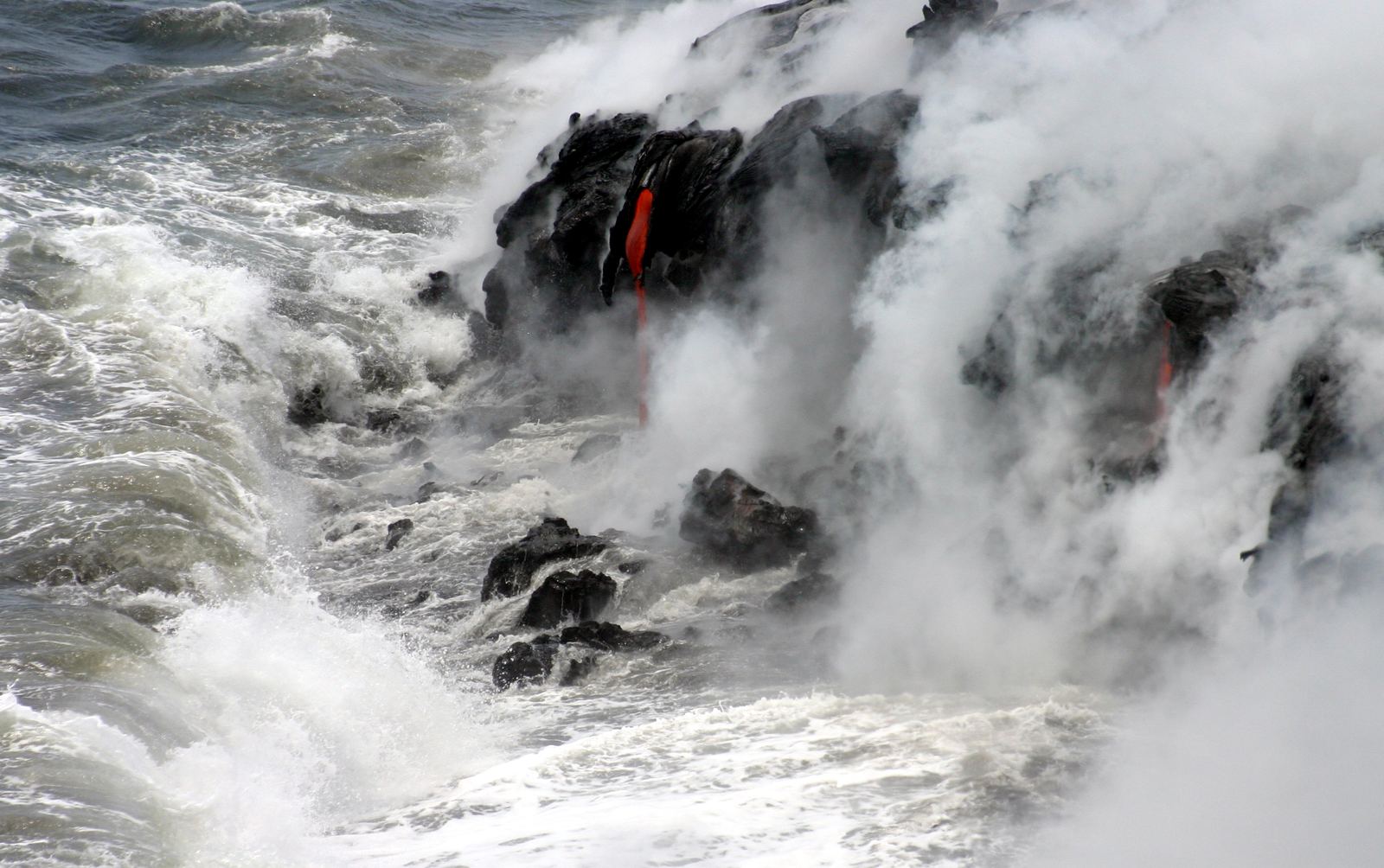
Lava meets the Pacific in Hawaii: Brocken Inaglory, CC BY-SA 3.0
The records
| Record | Holder | Figure | The fine print |
|---|---|---|---|
| Highest mountain above sea level | Mount Everest, Nepal and China | 8,848.86 m | Joint Nepal and China survey announced in December 2020. |
| Tallest mountain from base to peak | Mauna Kea, Hawaii | 4,207 m above sea level, about 9,330 m from its sea-floor base | The base is loosely defined, so published figures vary widely. |
| Deepest point in the ocean | Challenger Deep, Mariana Trench | About 10,935 m | Different surveys disagree by a few metres. |
| Lowest land on Earth | Shore of the Dead Sea | About 440 m below sea level (2025) | The level keeps falling, so this figure gets lower every year. |
| Longest river | Nile (traditional answer) | About 6,650 km | Some scientists argue the Amazon is longer; it depends on which source and which mouth you measure from. |
| Biggest river by flow | Amazon | About 220,000 cubic metres per second at the mouth | No other river comes close. |
| Largest lake | Caspian Sea | About 371,000 square km | It is salty, so some lists treat it separately. Five countries share its shore. |
| Largest freshwater lake by area | Lake Superior | About 82,100 square km | Lakes Michigan and Huron are bigger if you count them as one lake. |
| Deepest and oldest lake | Lake Baikal, Russia | 1,642 m deep, 25 to 30 million years old | Holds more fresh water than all of North America's Great Lakes combined. |
| Largest ocean | Pacific | About 165 million square km | Covers about a third of Earth's surface, more than all the land put together. |
| Tallest waterfall | Angel Falls, Venezuela | 979 m in total, with an 807 m single drop | Some still debate whether South Africa's Tugela Falls is taller. |
| Largest desert | Antarctica | About 14.2 million square km | A desert is defined by low precipitation, not heat. |
| Largest hot desert | Sahara | About 9.2 million square km | Third-largest desert overall, after Antarctica and the Arctic. |
| Driest non-polar desert | Atacama, Chile | Stretches about 1,600 km along the coast | Also the largest fog desert on Earth. |
| Highest recorded air temperature | Death Valley, USA | 56.7 C on 10 July 1913 | The official World Meteorological Organization record. |
| Lowest recorded air temperature | Vostok Station, Antarctica | -89.2 C on 21 July 1983 | Measured at ground level by station instruments. |
| Largest country | Russia | About 17.1 million square km | About 1.7 times the size of second-placed Canada. |
| Smallest country | Vatican City | About half a square km | Also the smallest population of any country, under 1,000 people. |
| Highest lowest point | Lesotho | 1,400 m | The only country lying entirely above 1,000 m. |
Why records are messier than they look
Rivers are the worst offenders. To measure one you have to pick its farthest source, trace every bend and decide where it actually meets the sea. The Amazon spills into a vast estuary, and choosing a different channel can add hundreds of kilometres. That is why the Nile versus Amazon question has never been fully settled.
Mountains have a similar problem. Everest wins on height above sea level, but Mauna Kea starts deep under the Pacific, so measured from its own base it is taller. Both answers are correct; they just answer different questions.
Several of these records have their own pages on Geographical Effect, including Mount Everest, Lake Baikal, the Dead Sea, the Amazon River and the Mariana Trench.
Explore the record holders
Pacific Ocean and the Mariana Trench
The largest ocean and the deepest place on Earth.
Egypt and the Nile Valley
How one river shaped where almost all Egyptians live.
- Kathmandu Post: Mount Everest is 8,848.86 metres tall
- Wikipedia: Mauna Kea
- NOAA Ocean Service: How deep is the ocean?
- Wikipedia: Dead Sea
- Wikipedia: List of river systems by length
- Wikipedia: Amazon River
- Wikipedia: Caspian Sea
- Wikipedia: Lake Superior
- Wikipedia: Lake Baikal
- Wikipedia: Pacific Ocean
- Wikipedia: Angel Falls
- Wikipedia: Antarctica
- Wikipedia: Sahara
- Wikipedia: Atacama Desert
- Wikipedia: Highest temperature recorded on Earth
- Wikipedia: Lowest temperature recorded on Earth
- Wikipedia: List of countries and dependencies by area
- Wikipedia: Vatican City
- Wikipedia: Lesotho
Facts on this page were checked against these sources (updated Oct 1, 2026). Spot an error? Email hello@fireempireshop.com.