
Norway
Capital, major cities, population, maps, climate, landscapes and landmarks of Norway, in Northern Europe.
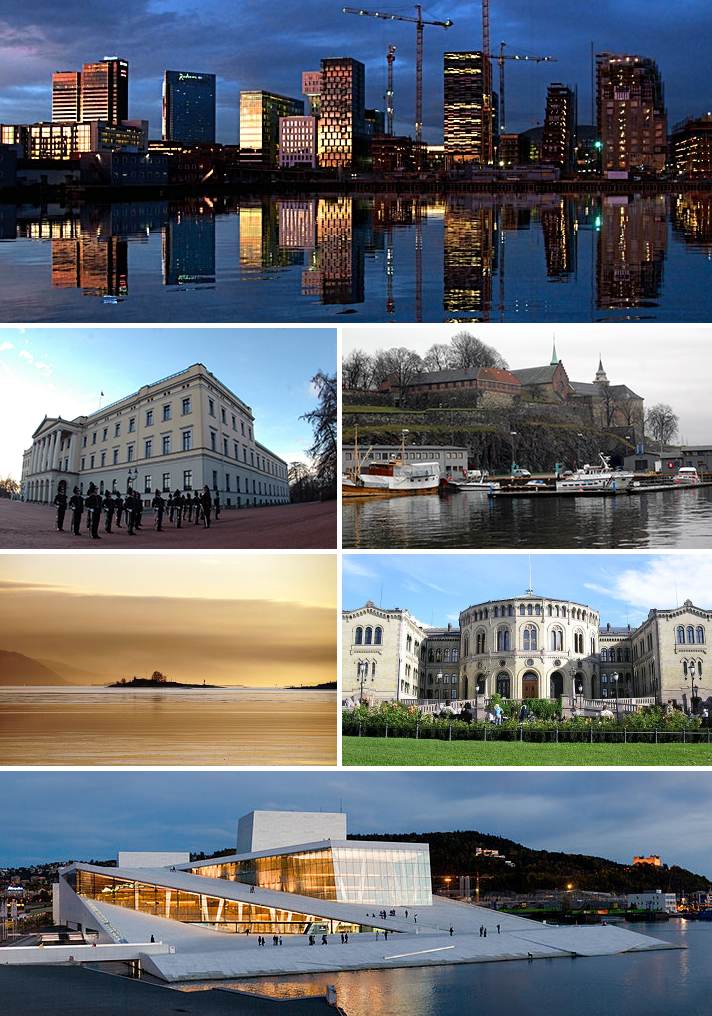
Oslo newer montage 2013: Jonipoon, CC BY-SA 3.0 (Wikimedia Commons)

Overview
Norway is a country in Northern Europe, part of Europe. It covers about 323,802 km² (125,021 sq mi), the 70th largest of the 250 countries and areas in our atlas, and is home to roughly 5.6 million people (119th by population). That works out to about 17 people per km².
Norway has a sea coast as well as land neighbours. It shares land borders with 3 neighbours. The highest point is Galdhøpiggen at 2,469 m (8,100 ft). Among its rivers, the Glomma is the longest in our data at about 604 km of total length.
The capital is Oslo. The largest city in our atlas is Oslo, with about 1.1 million people in the city proper. Languages include Norwegian Nynorsk, Norwegian Bokmål, Sami. Clocks run on UTC+01:00.
Where is Norway?
Highlighted shape and city dots (red = capital, green = major cities). Map data: Natural Earth (public domain); shapes are simplified and do not represent any position on boundaries.
Major cities
| City | Region | Population |
|---|---|---|
| Oslo (capital) | Oslo | 1,082,575 |
| Bergen | Vestland | 294,029 |
| Trondheim | Trøndelag | 216,518 |
| Stavanger | Rogaland | 151,669 |
| Kristiansand | Agder | 117,237 |
| Drammen | Buskerud | 106,013 |
City-proper populations from GeoNames; metropolitan areas are often much larger.
Geography highlights
Rivers
- Glomma · 604 km
- Klarälven · 460 km
- Paatsjoki · 385 km
- Tana · 370 km
- Numedalslågen · 358 km
- Otra · 245 km
Deserts
- Arctic desert
National parks
- Rondane National Park
- Børgefjell National Park
- Dovrefjell–Sunndalsfjella National Park
- Ånderdalen National Park
- Hardangervidda National Park
- Rago National Park
Sizes are total lengths, heights and areas as recorded on Wikidata.
Top landmarks
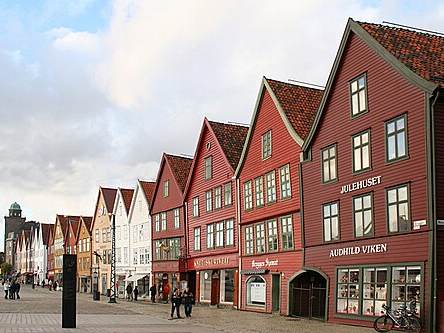
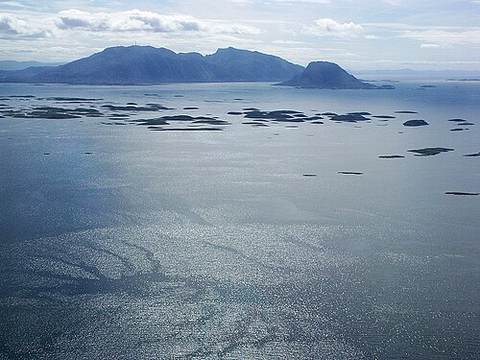
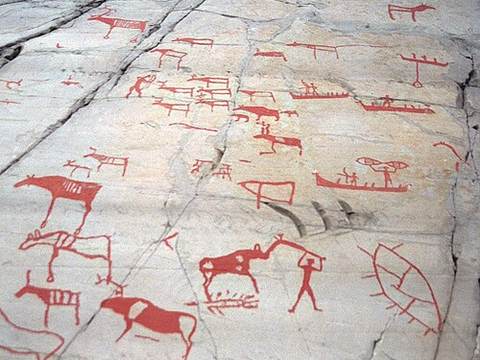

Climate
Oslo has a continental (warm summer) climate (Köppen Dfb). The warmest month is usually Jul, with average highs near 20°C (69°F); the coolest nights come in Jan at about -8°C (17°F). Around 1,049 mm (41 in) of rain and snow falls in a typical year, spread fairly evenly through the year.
Bars: average daily high and low (°C) for each month; blue columns and figures: average precipitation (mm). Gridded 2001-2025 averages from NASA POWER, so mountain and coastal spots can differ from local station records.
Top dishes
The signature dish is Farikal. Norwegian food draws on the sea, the mountains and the forest: salmon, cod, herring, lamb, dairy, berries and rye.
- Farikal
- Kjottkaker
- Raspeballer
- Polse i lompe
- Vafler
- Skolebolle
- Brunost on bread
- Havregrot
- Frokost
- Fiskesuppe
- Ertesuppe
- Gulrotsalat
- Agurksalat
- Krumkake
Fun geography facts
- Norway is the 70th largest country or area by land and water area in our atlas.
- From Kristiansand in the south to Trondheim in the north, its major cities span about 586 km of latitude.
- Its centre lies far from the equator, at about 62° N, near or inside the polar circle.
- Oslo gets about 1,049 mm of precipitation a year (continental (warm summer) climate).
Neighbouring countries
More in Northern Europe
- Åland Islands
- Denmark
- Estonia
- Faroe Islands
- Finland
- Guernsey
- Iceland
- Ireland
- Isle of Man
- Jersey
- Latvia
- Lithuania
- Svalbard and Jan Mayen
- Sweden
- United Kingdom
- Country names, codes, languages, currencies, area: mledoze/countries (ODbL), the dataset behind REST Countries
- Population: World Bank (CC BY 4.0), else GeoNames
- Cities, time zones, elevations: GeoNames (CC BY 4.0)
- Geography and landmarks: Wikidata Q20 (CC0)
- Climate: NASA POWER 2001-2025 climatology
- Map: Natural Earth (public domain)
Text written by Geographical Effect from these sources. Spot an error? Email hello@fireempireshop.com.
- Oslo newer montage 2013: Jonipoon, CC BY-SA 3.0 (Wikimedia Commons)
- Bryggen, Bergen3: Unknown, CC BY-SA 2.5 (Wikimedia Commons)
- Vegaoyan: Ann Elin Bratseth, CC BY 2.5 (Wikimedia Commons)
- Alta-Carvings-2012-07-17-12-15-018: Karl Brodowsky, CC BY-SA 3.0 (Wikimedia Commons)
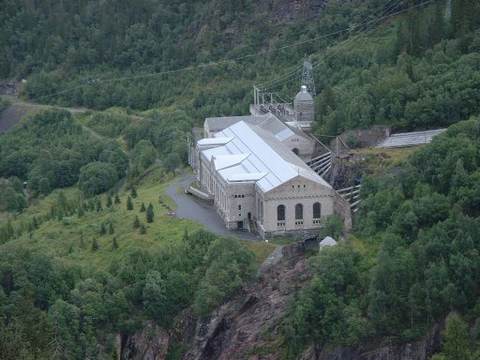
- VemorkHydroelectricPlant: MiSi at German Wikipedia, Public domain (Wikimedia Commons)
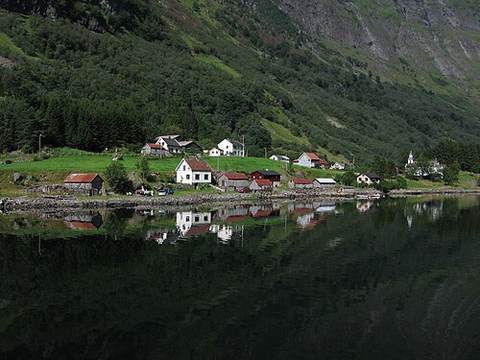
- Village in Norway: No machine-readable author provided. Yorian~commonswiki assumed (based on copyright claims)., CC BY-SA 3.0 (Wikimedia Commons)
- Dano-Norwegian alphabet: 12u, CC0 (Wikimedia Commons)
- MUNCH Museum front (2020) 4: Premeditated, CC BY-SA 4.0 (Wikimedia Commons)


