
Salvador
City in Brazil: population, location, elevation, climate and landmarks.
Overview
Salvador is a city in Brazil, in Bahia. About 2.7 million people live in the city proper, making it the 4th largest city of Brazil in our atlas.
It lies at 12.98° S, 38.49° W, about 4 m (13 ft) above sea level, and keeps time on the America/Bahia time zone. It sits inside the tropics.
Location
Red dot: Salvador. Green dots: other major cities of Brazil. Map data: Natural Earth.
Climate
Salvador has a tropical monsoon climate (Köppen Am). The warmest month is usually Mar, with average highs near 30°C (87°F); the coolest nights come in Aug at about 21°C (69°F). Around 1,214 mm (48 in) of rain and snow falls in a typical year, most of it in May.
Bars: average daily high and low (°C) for each month; blue columns and figures: average precipitation (mm). Gridded 2001-2025 averages from NASA POWER, so mountain and coastal spots can differ from local station records.
Landmarks and places to see
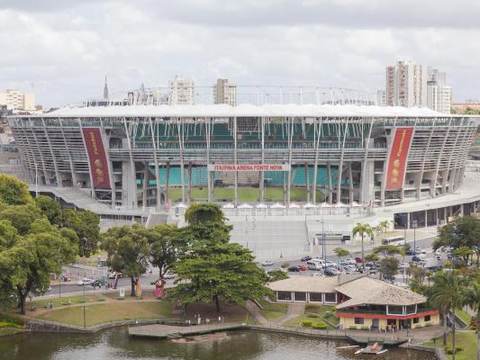
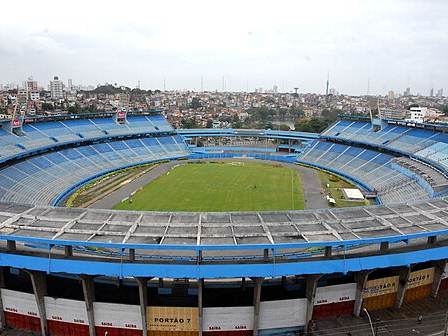
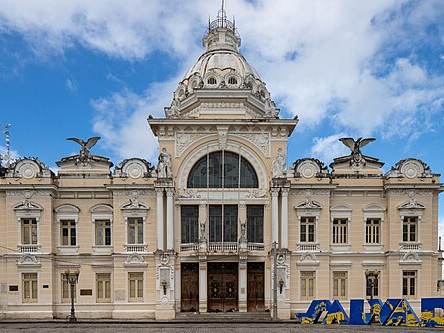
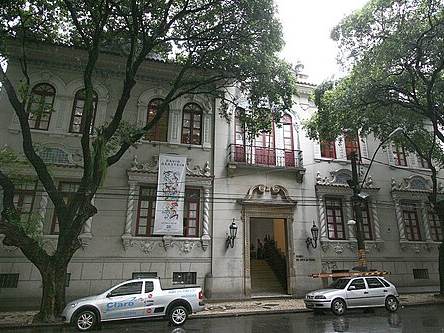
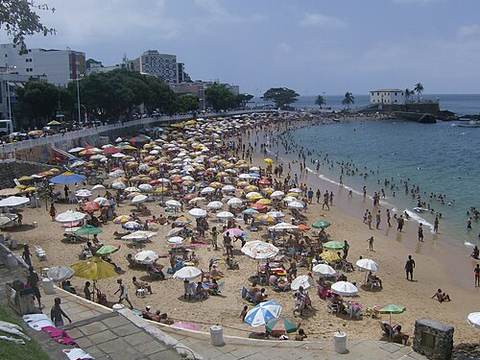
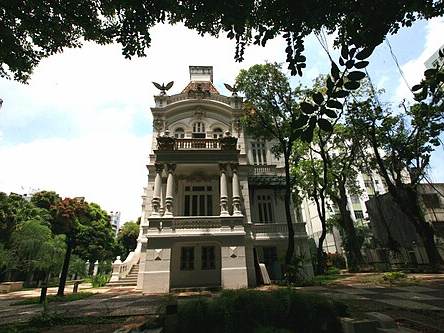
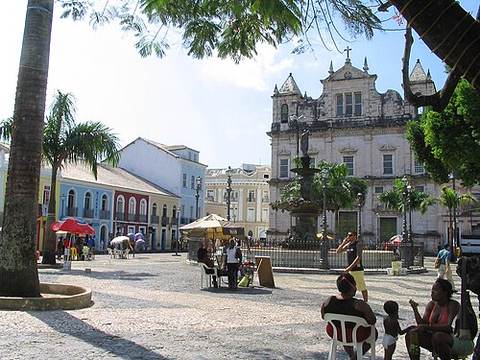
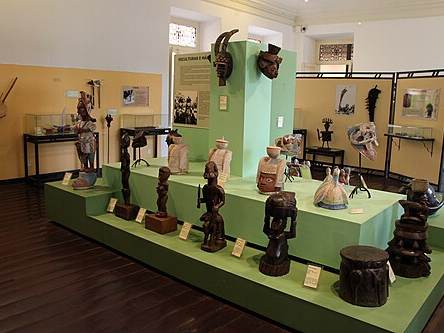
Popular sights within a few kilometres of the city centre, ranked by how widely they are documented on Wikipedia.
What to eat in BrazilNational dishes, street food, desserts and drinks on Intercontinental Chef.Nearby major cities
- Maceió · 473 km
- Recife · 672 km
- Belo Horizonte · 970 km
- Fortaleza · 1,028 km
- Brasília · 1,067 km
- Rio de Janeiro · 1,214 km
- Goiânia · 1,235 km
- Campinas · 1,440 km
- Population, coordinates, elevation, time zone: GeoNames 3450554 (CC BY 4.0)
- Wikidata Q32148682 (CC0)
- Climate: NASA POWER 2001-2025 climatology
Text written by Geographical Effect from these sources.
- Salvador aerea arenafontenova: ME/ Portal da Copa/, CC BY 3.0 br (Wikimedia Commons)
- 2116RP037: Agência Brasil, CC BY 3.0 br (Wikimedia Commons)
- Palácio Rio Branco 2019-6562: Paul R. Burley, CC BY-SA 4.0 (Wikimedia Commons)
- Museu de Arte da Bahia: Agecom Bahia from Bahia/Brasil, CC BY 2.0 (Wikimedia Commons)
- Praia do Porto da Barra 4: by Luan, CC BY-SA 4.0 (Wikimedia Commons)
- Palacete das Artes Rodin Bahia: Agecom Bahia from Bahia/Brasil, CC BY 2.0 (Wikimedia Commons)
- TerreiroJesus-Salvador1: lilap, CC BY 2.0 (Wikimedia Commons)
- Salvador, museo afro-brasileiro, sala 02: Sailko, CC BY-SA 4.0 (Wikimedia Commons)


